Managing a team scattered across continents means wrestling with a fundamental tension. You need real-time collaboration for certain decisions, but you also need people to actually sleep. The answer isn’t more meetings or longer workdays. It’s understanding how time zone overlap works and building systems that respect both collaboration needs and human limits.
Time zone overlap for remote teams is the shared working hours when distributed team members are online simultaneously. Strategic overlap management balances synchronous collaboration needs with async workflows, protects personal boundaries, and prevents timezone bias. Most effective global teams protect 2-4 hours of daily overlap for critical decisions while pushing routine work to async channels to avoid meeting fatigue and burnout.
What Time Zone Overlap Actually Means for Distributed Teams
Time zone overlap is the window when team members in different locations are all working at the same time. For a team spanning San Francisco to Berlin, that might be just three hours. For teams covering Sydney to New York, it might be zero.
This overlap determines what kind of collaboration is possible. With four hours of shared time, you can run real-time planning sessions. With two hours, you’re limited to standups and urgent decisions. With zero overlap, you’re forced into fully asynchronous work.
Most teams discover their overlap by accident, usually when scheduling the first all-hands meeting becomes impossible. Someone always ends up on a call at 6 AM or 10 PM. That’s your first signal that overlap needs intentional design, not guesswork.
The math gets complicated fast. A team with members in Tokyo (UTC+9), London (UTC+0), and Los Angeles (UTC-8) has exactly one hour when all three zones overlap during standard working hours. One hour per day for a global team to make decisions together.
Why Most Teams Get Overlap Strategy Wrong
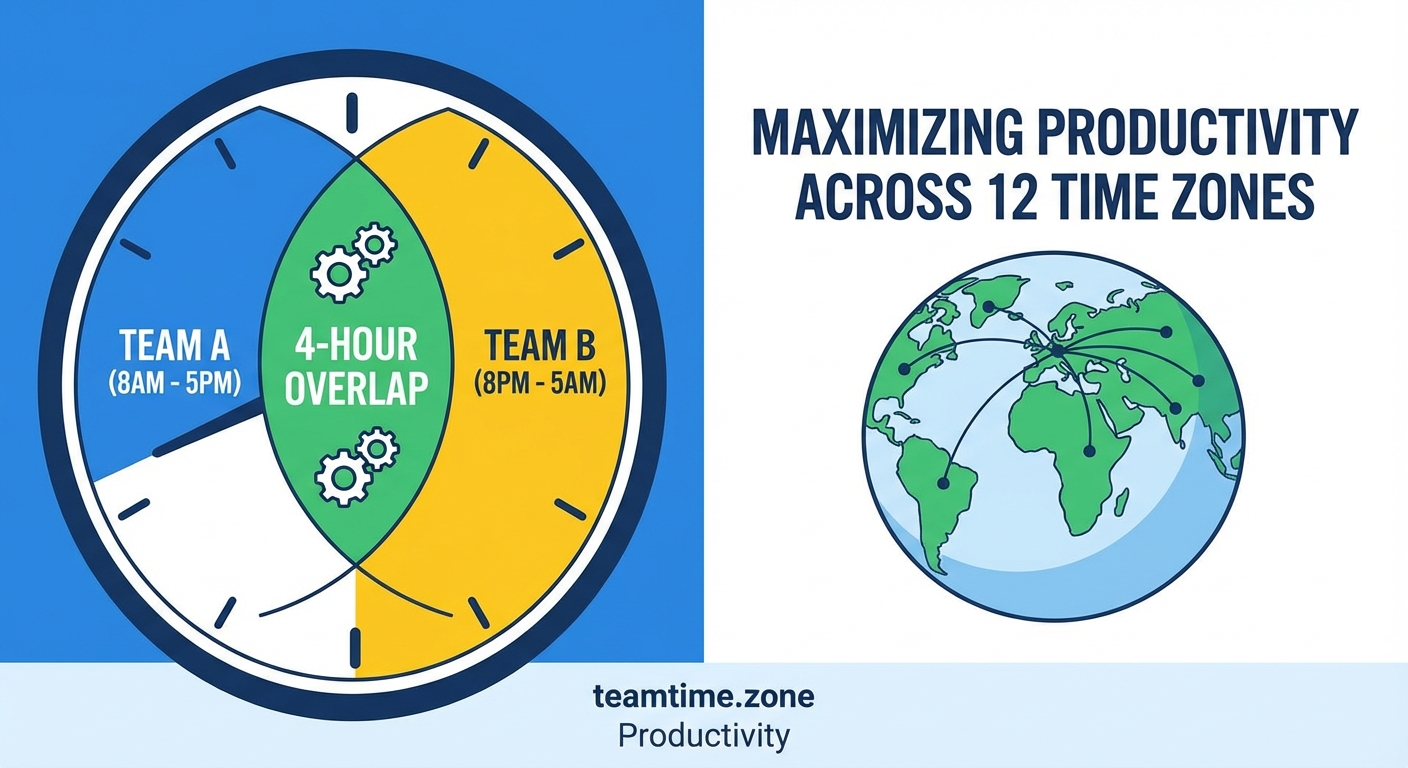
The default approach is to find the overlap and pack it full of meetings. Every standup, planning session, and review gets crammed into those precious shared hours. Within weeks, people start dreading the overlap window instead of protecting it.
This happens because teams confuse “overlap exists” with “overlap should be used constantly.” The overlap becomes a bottleneck instead of a resource.
Another common mistake is assuming overlap needs to be the same every day. Teams lock in a standing meeting at 9 AM Pacific, 5 PM London, 2 AM Sydney. The Sydney team burns out. Leadership wonders why retention is terrible in the APAC region.
The real issue is treating all work as equally urgent. Not every decision needs synchronous discussion. Most don’t. But without clear guidelines about what requires real-time collaboration versus what can happen async, everything defaults to meetings during overlap hours.
The Three Types of Overlap Your Team Actually Needs
Not all overlap serves the same purpose. Breaking it into categories helps you allocate those hours intentionally.
Decision overlap is time reserved for choices that genuinely need real-time discussion. Product direction changes, architectural decisions, crisis response. These benefit from immediate back-and-forth. Budget 1-2 hours per week maximum.
Social overlap maintains team cohesion. Coffee chats, team celebrations, informal check-ins. This is where building trust in remote teams when you never meet face-to-face happens. Schedule these regularly but keep them optional.
Coordination overlap handles handoffs and quick clarifications. A developer in Berlin needs 10 minutes with the designer in Austin to clarify a mockup. This doesn’t need a meeting, just shared availability. Protect 2-3 hours for this daily.
The mistake is treating all three types as equally important. Decision overlap is rare and valuable. Coordination overlap is frequent but brief. Social overlap builds culture but shouldn’t be mandatory for people outside comfortable hours.
| Overlap Type | Frequency | Duration | Required Attendance |
|---|---|---|---|
| Decision | Weekly | 1-2 hours | Key stakeholders only |
| Social | Bi-weekly | 30-60 minutes | Optional |
| Coordination | Daily | 2-3 hour window | As needed |
How to Calculate Your Team’s Actual Usable Overlap
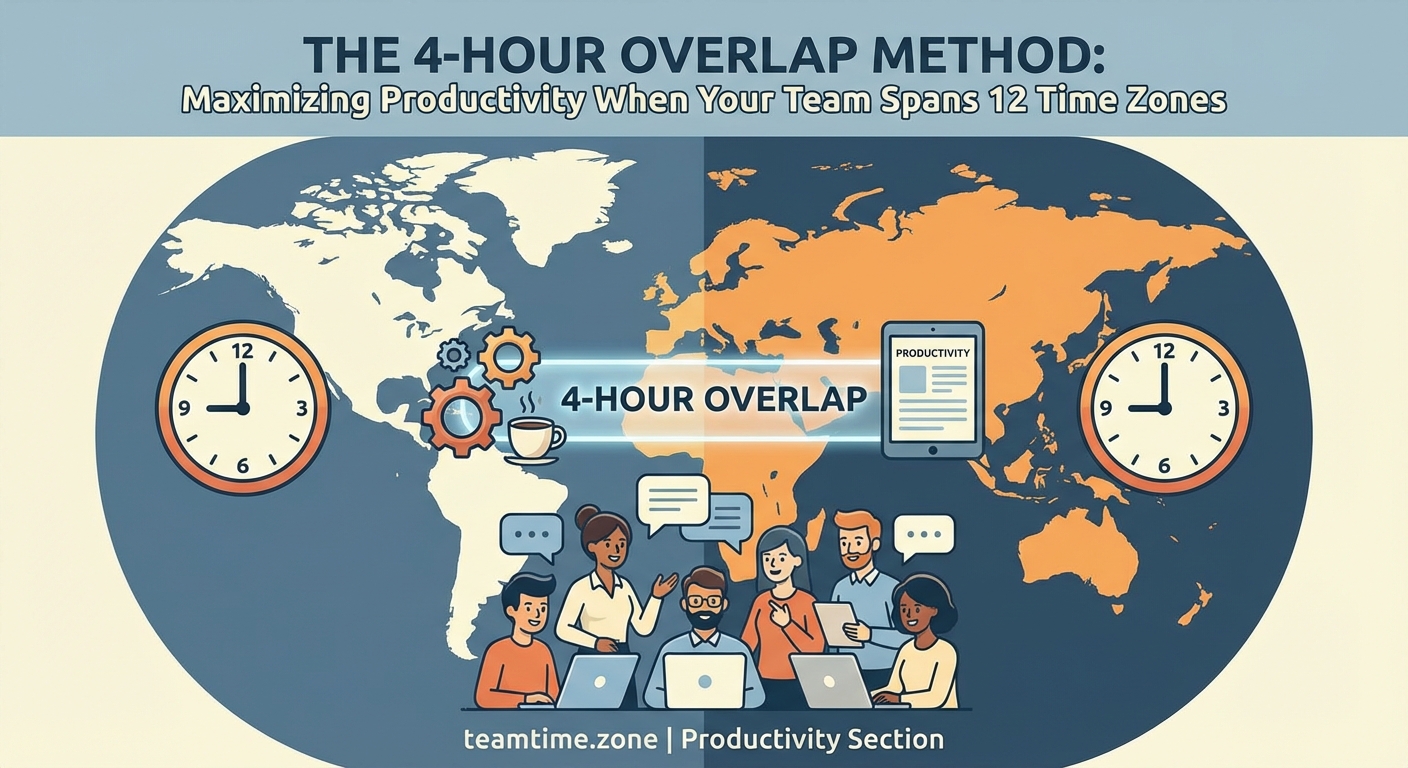
Start by mapping every team member’s working hours in UTC. Not their time zone, their actual preferred working hours converted to a single reference point.
- List each person’s location and standard working hours
- Convert all hours to UTC using a reliable converter
- Identify windows where at least 70% of the team overlaps
- Mark which windows fall during reasonable hours (8 AM to 7 PM local time) for everyone
You’re looking for overlap that doesn’t require anyone to regularly work early mornings or late nights. If your only overlap requires someone to be online at 6 AM daily, that’s not sustainable overlap.
For teams with zero natural overlap, you’ll need to rotate sacrifice. The engineering team takes turns joining late-night calls with the Asia-Pacific region. Next month, APAC joins early morning calls with the Americas. This rotation prevents burnout in any single timezone.
Tools like meeting scheduling software that respects time zones automate most of this calculation. But understanding the manual process helps you spot when tools are suggesting unreasonable meeting times.
“We thought we had four hours of overlap between our US and European teams. Then we realized two of those hours were 6-7 PM in Berlin. People had families, dinner plans, lives. Our actual usable overlap was two hours, and we had to redesign everything around that reality.” – Engineering Director at a Series B SaaS company
Protecting Overlap Hours From Meeting Creep
Once you identify your overlap, the next challenge is preventing it from becoming 100% meetings. This requires active defense.
Establish a rule that overlap hours are for synchronous work only when async genuinely won’t work. Before scheduling any meeting during overlap, someone must answer: “Why can’t this be a document, a recorded video, or a threaded discussion?”
Create a meeting budget. Each team gets a maximum number of overlap hours per week for meetings. Product might get three hours. Engineering gets two. Marketing gets one. When the budget is spent, new meetings either wait until next week or happen async.
Implement async standups that actually work for routine status updates. Daily standups are the biggest consumer of overlap time and provide the least value when done synchronously.
Block overlap time for focus work too. Just because everyone is online doesn’t mean they should all be in meetings. Some people do their best work during overlap hours because that’s when they can get immediate answers if blocked.
Building Async Workflows That Reduce Overlap Dependency
The less you depend on overlap for routine work, the more valuable that overlap becomes for decisions that truly need it.
Start by identifying which current meetings could become async updates. Status reports, project updates, weekly recaps, most one-way information sharing. All of this can move to recorded videos, written updates, or async discussion threads.
Building an async-first communication culture means defaulting to async and only going synchronous when necessary. This inverts the normal pattern where meetings are default and async is the exception.
Document decisions asynchronously so people in all time zones can contribute before the decision is finalized. A design proposal goes in a shared doc. People comment over 48 hours. Then a 30-minute sync call during overlap finalizes the choice. Everyone had input, but the overlap time was minimal.
Use async workflow templates for common scenarios to standardize how different types of work happen. Bug reports follow one template. Feature proposals follow another. This reduces the need for clarifying meetings during overlap.
The goal isn’t to eliminate synchronous work. It’s to make synchronous time rare and valuable instead of constant and draining.
When Zero Overlap Actually Works Better
Some teams span so many time zones that meaningful overlap is impossible without someone regularly working terrible hours. In these cases, embracing zero overlap and going fully async often works better than forcing bad overlap.
A follow-the-sun workflow passes work between time zones like a relay race. The US team finishes their day and hands off to the APAC team. APAC hands off to Europe. Europe hands back to the US. Work continues 24 hours without anyone working overtime.
Why your distributed team needs a follow-the-sun workflow explains how to structure this handoff process so nothing falls through cracks.
This requires exceptional documentation. Every handoff needs context, current status, blockers, and next steps clearly written. Poor documentation breaks the relay.
Zero overlap teams also need different success metrics. You can’t measure productivity by meeting attendance or immediate response times. Output, completed work, and documented decision quality become the important measures.
Some work genuinely needs real-time collaboration. For zero-overlap teams, this means occasional sacrifice. Schedule a quarterly planning session where everyone joins at an awkward hour. Rotate which timezone gets the worst time. Make it rare enough that people accept the inconvenience.
The Overlap Mistakes That Destroy Remote Team Culture
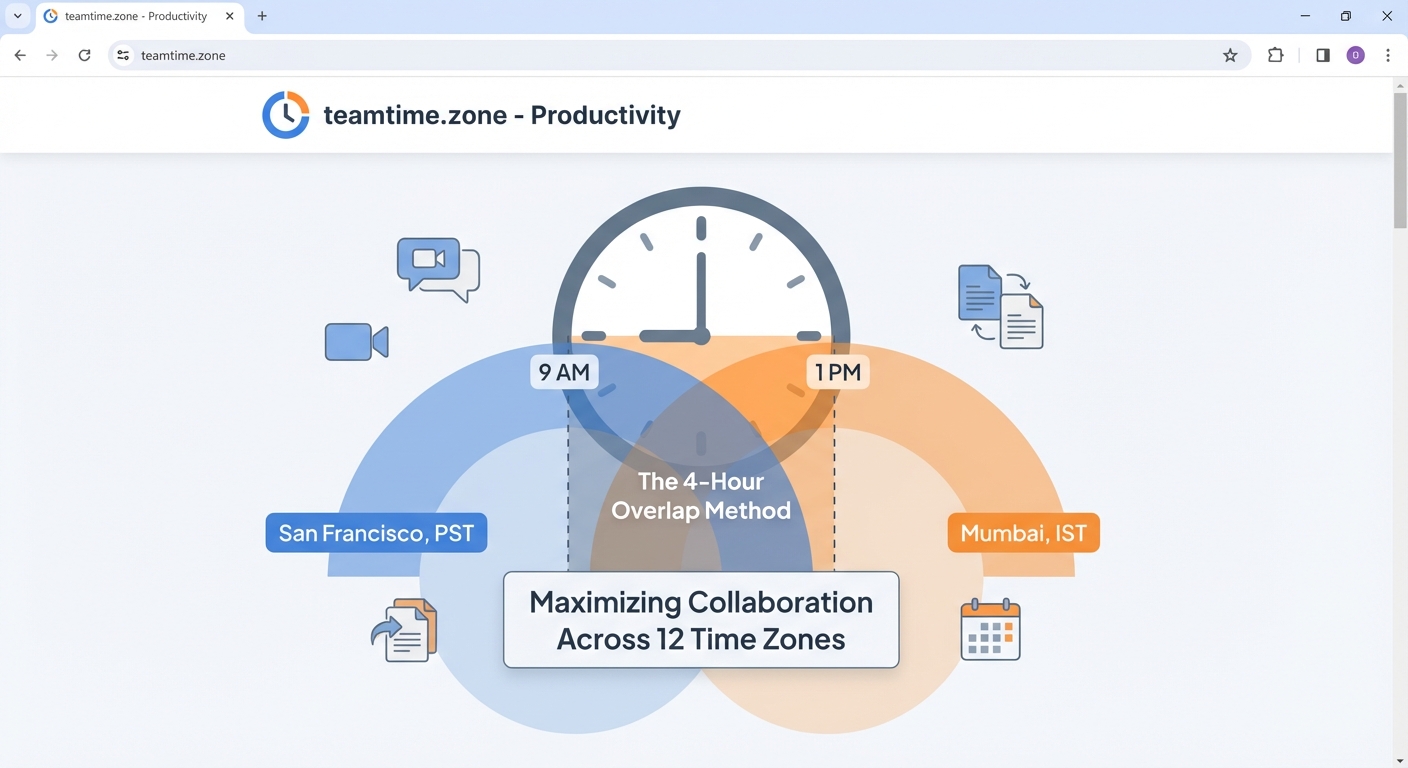
Timezone bias creeps in when overlap hours favor certain locations. If all important meetings happen at 10 AM Pacific, the US team becomes the core team. Everyone else becomes peripheral.
This shows up in subtle ways. Promotions go to people in the “main” timezone because they’re in more meetings. Career development opportunities get announced during overlap hours when half the team is asleep. Social bonding happens in the favored timezone’s afternoon.
Preventing timezone bias requires actively rotating meeting times and ensuring opportunities reach all timezones equally.
Another culture killer is the expectation of immediate responses during overlap. Just because someone is online doesn’t mean they’re available for instant replies. Response time expectations that kill productivity create constant interruption and prevent deep work.
Celebrating wins across time zones also requires thought. If you announce a major success during US business hours, the APAC team wakes up to old news. They missed the celebration. Celebrating team wins asynchronously ensures everyone participates in victories.
The biggest mistake is assuming overlap automatically creates connection. It doesn’t. Poorly managed overlap creates resentment. Someone is always sacrificing sleep or family time. Without intentional fairness, that someone is usually the same people repeatedly.
Tools That Make Overlap Management Actually Work
The right tools reduce the mental overhead of managing time zone overlap for remote teams. The wrong tools add complexity without solving problems.
World clock apps show multiple time zones simultaneously. Essential for quick checks before scheduling. But they don’t prevent you from scheduling a meeting at 3 AM for someone.
Smart calendar tools like Clockwise versus Reclaim AI automatically find meeting times that work across time zones. They factor in working hours preferences and suggest times that minimize inconvenience.
Async communication platforms (Slack, Teams, Discord) need timezone awareness built into workflows. Scheduled send features let you write messages during your work hours but deliver them during the recipient’s work hours. This prevents 2 AM pings.
Free versus paid timezone tools breaks down which features actually matter. Most teams overpay for features they never use.
Meeting recording tools become critical for teams with minimal overlap. If only half the team can attend live, the recording needs to be easy to find, searchable, and include written summaries. Meeting recordings done right covers the technical and cultural aspects.
The tool stack matters less than the system. Great tools with poor processes still result in 11 PM meetings and burned-out teams. Simple tools with clear guidelines work better than sophisticated software with no usage standards.
Making Overlap Work for Teams That Never Stop Growing
As teams add people in new time zones, overlap shrinks or disappears entirely. What worked for a US-Europe team breaks when you add APAC members.
The temptation is to split into regional teams. Americas team, EMEA team, APAC team. This sometimes works but often creates silos. The regional teams stop coordinating. Duplicate work happens. Strategic alignment suffers.
A better approach is to design for minimal overlap from the start. Even when you have good overlap now, build async processes as if you had zero overlap. This makes geographic expansion easier and prevents dependence on synchronous work.
Some companies intentionally hire in clusters. If you need to expand the engineering team, hire three people in the same timezone rather than one person in three new zones. This maintains some regional overlap while expanding capacity.
The remote team onboarding checklist for global companies includes timezone considerations in the hiring and onboarding process. New hires learn overlap norms from day one.
Regular audits help too. Every quarter, review your meeting patterns. Are certain time zones consistently getting the worst meeting times? Is overlap being used for work that could be async? Are people burning out from late-night or early-morning meetings?
Adjustment happens continuously. The overlap strategy that worked last quarter might not work this quarter. Team size changes, projects change, people’s personal situations change. Flexibility beats rigid rules.
What Great Overlap Strategy Looks Like in Practice
Teams that handle time zone overlap well share certain patterns. They protect overlap hours fiercely. They default to async. They rotate inconvenience fairly.
They also communicate expectations clearly. Everyone knows which types of decisions need synchronous discussion and which can happen async. There’s no ambiguity about response time expectations or meeting attendance requirements.
These teams measure different things. Instead of tracking meeting attendance, they track decision velocity and output quality. Instead of valuing immediate responses, they value thoughtful, complete responses.
They invest in async project management skills because managing across time zones requires different capabilities than managing colocated teams.
Most importantly, they recognize when async doesn’t work and switch to synchronous communication for those specific situations. They’re not dogmatic about async. They’re strategic about when to use each mode.
The result is teams that collaborate effectively across continents without burning people out. Overlap time is valuable because it’s rare and protected. Async work is efficient because it’s the default. People in all time zones have equal opportunities because the system is designed for fairness.
Making Time Zones Work for You Instead of Against You
Time zone overlap for remote teams isn’t a problem to solve once and forget. It’s an ongoing practice that requires attention, adjustment, and intentionality. The teams that treat it as a core operational concern rather than a scheduling nuisance build stronger, more sustainable distributed cultures.
Start with your current overlap situation. Map it. Measure it. Then protect it ruthlessly while building async alternatives for everything that doesn’t absolutely require real-time collaboration. Your team’s sanity and your company’s ability to scale globally both depend on getting this right.