
Managing a team spread across continents means wrestling with one persistent headache: finding a meeting time that doesn’t wreck someone’s evening or force them awake at 3 a.m. You’ve probably sent calendar invites that accidentally scheduled your London colleague at midnight, or watched half your team join bleary-eyed because you forgot about daylight saving shifts. The truth is, scheduling meetings across time zones isn’t just about math. It’s about fairness, clarity, and building systems that work even when you’re juggling eight different cities.
Successful global meeting coordination requires rotating sacrifice across team members, protecting overlap hours for essential discussions, and defaulting to asynchronous work whenever possible. Use automated scheduling tools that detect time zones automatically, always specify UTC or local times clearly in invites, and record every session so no one misses critical information because of geography.
Why time zone scheduling breaks down
Most scheduling disasters stem from three common mistakes.
First, people assume their calendar app handles everything automatically. It doesn’t. Google Calendar might convert times for invitees, but it won’t warn you when you’ve scheduled someone outside reasonable working hours. You’ll send the invite thinking everything looks fine on your end, while your colleague in Singapore sees a 10 p.m. start time.
Second, teams treat all meetings as equally urgent. They schedule weekly check-ins, brainstorming sessions, and status updates with the same priority, forcing everyone into synchronous attendance. This creates meeting fatigue and resentment, especially for team members who consistently draw the short straw on timing.
Third, there’s often no shared understanding of what counts as acceptable meeting hours. One manager might think 7 a.m. is perfectly reasonable. Another refuses to schedule anything before 9 a.m. Without explicit agreements, you’re left guessing what works for everyone.
The result? Burned-out team members, low attendance rates, and critical decisions made without full team input.
Finding overlap hours that actually work
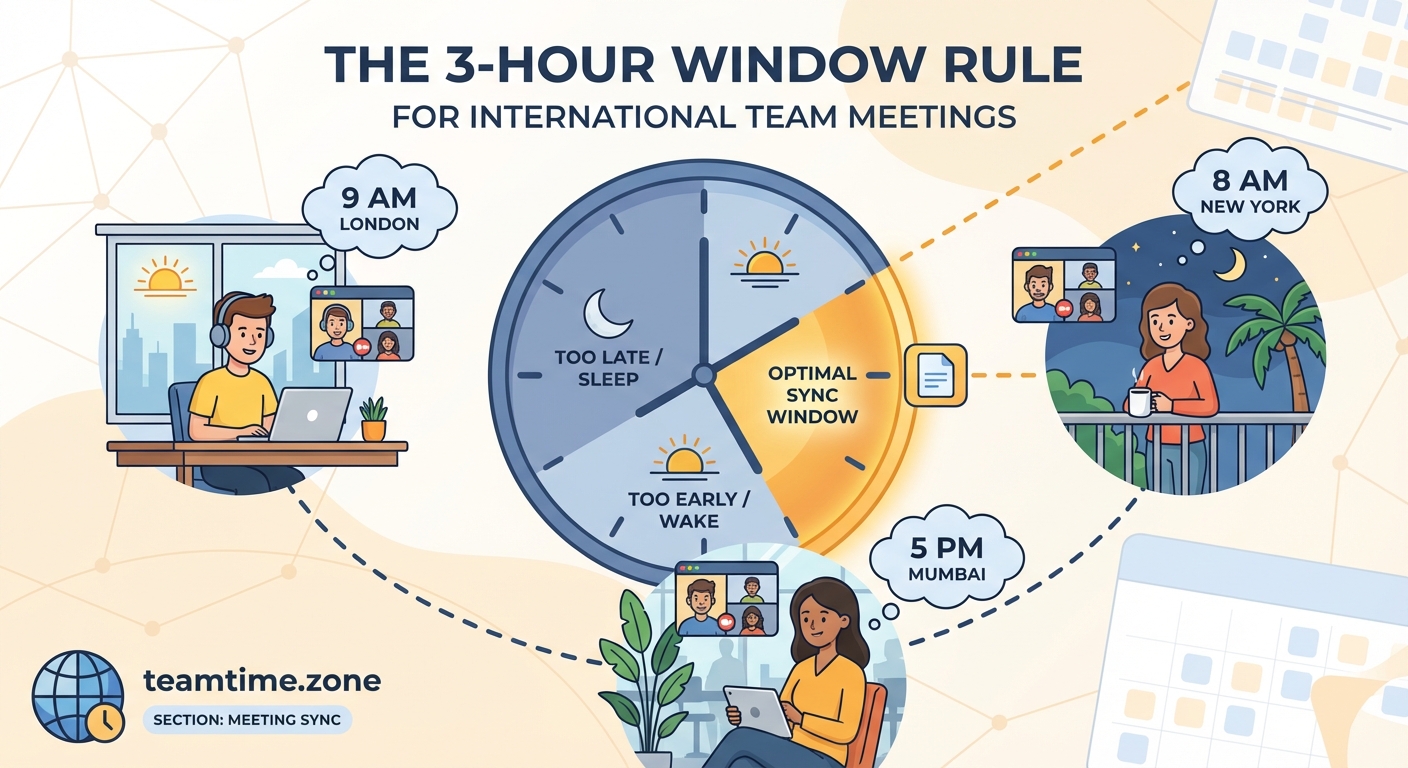
Start by mapping everyone’s working hours in a shared document or tool.
List each team member’s name, location, and typical work schedule in their local time. Then convert everything to UTC as your neutral reference point. This gives you a baseline for comparison without favoring any single time zone.
Look for natural overlap windows where at least 75% of your team is within normal working hours. For teams spanning extreme distances, this window might be tiny or nonexistent. A team split between California and India, for example, has almost zero overlap during standard business hours.
When overlap exists, protect it fiercely. Reserve these hours for discussions that genuinely need everyone present: decision-making meetings, sensitive conversations, or collaborative problem-solving sessions. Everything else should move to asynchronous formats like recorded updates, threaded discussions, or collaborative documents.
For teams with no natural overlap, you have two choices. Either rotate meeting times so the burden distributes fairly, or split the team into regional pods that sync asynchronously. Both approaches work, but they require commitment and clear communication norms.
The rotation system that shares the pain
Rotating meeting times prevents the same people from always suffering through late-night or early-morning calls.
Here’s how to implement it:
- Identify your core recurring meetings that require synchronous attendance.
- Calculate two or three time slots that rotate the inconvenience across different team members.
- Set a rotation schedule (weekly, biweekly, or monthly depending on meeting frequency).
- Communicate the rotation clearly in advance so people can plan around it.
- Record every session and share notes immediately afterward.
For example, a weekly team standup might rotate between 8 a.m. Pacific (evening for Asia), 5 p.m. Pacific (morning for Europe), and noon Pacific (late evening for Asia, early morning for East Coast). No single time works perfectly for everyone, but the rotation ensures fairness.
The key is transparency. Team members tolerate inconvenient meeting times when they see others making the same sacrifice. They lose patience when the burden falls consistently on the same people.
“The best global teams don’t try to find perfect meeting times. They build systems that acknowledge the impossibility of perfect timing and distribute the inconvenience equitably.”
Tools that prevent time zone mistakes
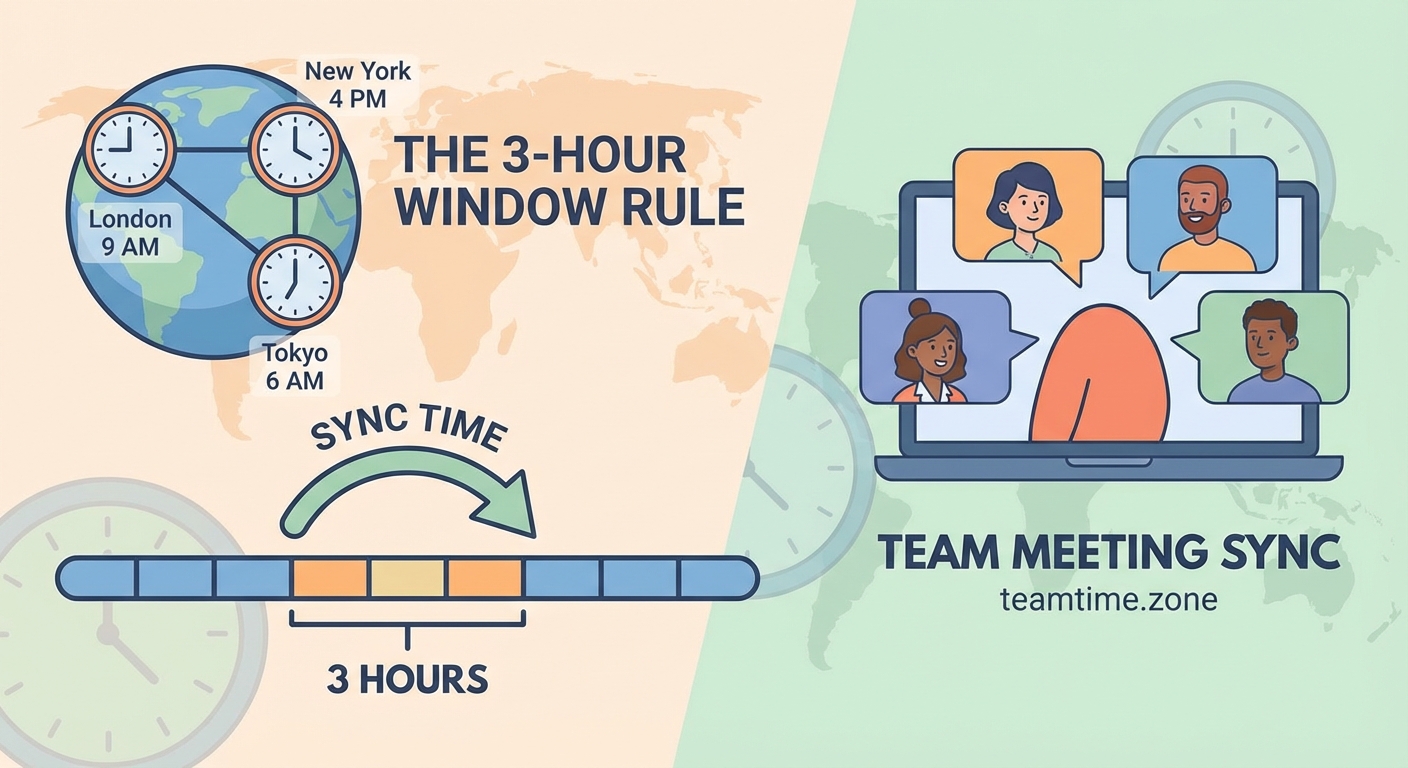
Manual time zone conversion invites errors. Use tools that automate the heavy lifting.
World clock apps show multiple time zones simultaneously, making it easy to spot conflicts before sending invites. Many teams keep a shared world clock visible during scheduling discussions.
Calendar tools with automatic time zone detection eliminate confusion. When you create an event, the tool shows each recipient what time the meeting occurs in their local zone. This prevents the classic mistake of inviting someone to “3 p.m.” without specifying which 3 p.m. you mean.
Scheduling assistants like 7 meeting scheduling tools that actually respect time zones handle the back-and-forth of finding mutually available slots. You set your availability, invitees pick from options that work for them, and the tool handles all conversions automatically.
For teams managing extreme complexity, dedicated time zone planning tools offer features like overlap visualization, fairness scoring, and rotation scheduling. These tools cost money but save hours of manual coordination for larger distributed teams.
Best practices for calendar invites
Every meeting invitation should include specific time zone information, even when using tools that convert automatically.
Always state the time in at least two formats: the organizer’s local time and UTC. For example, “Meeting starts at 2 p.m. EST (19:00 UTC).” This redundancy catches conversion errors and helps people double-check their calendar’s interpretation.
Include the meeting duration explicitly. Don’t just list a start time. Specify “2 p.m. to 3 p.m. EST” so people can accurately assess the commitment in their own schedule.
Add a note about recording. Let people know the session will be recorded and where they can find it afterward. This reduces anxiety for anyone who can’t attend live and signals that asynchronous participation is acceptable.
Consider adding a “local time checker” link in recurring meeting invites. Services that generate shareable time zone comparison links help new team members or guests verify timing without asking.
For meetings that cross daylight saving transitions, double-check everything. Daylight saving doesn’t happen on the same dates globally, creating temporary shifts in relative time zones. A meeting that normally works perfectly might suddenly conflict for two weeks each spring and fall.
When to skip the meeting entirely
Most meetings shouldn’t be meetings at all.
Before scheduling anything, ask whether the goal could be accomplished asynchronously. Status updates, project announcements, routine check-ins, and information sharing rarely need real-time discussion.
Replace these with recorded videos, written updates, or collaborative documents. Team members consume the information when it fits their schedule, ask questions in threaded comments, and move forward without coordinating calendars.
How to build an async-first communication culture in your remote team provides frameworks for shifting away from meeting-heavy workflows. The transition takes effort, but the payoff in scheduling flexibility and focus time is substantial.
For truly global teams, asynchronous work isn’t optional. It’s the only sustainable path. Trying to coordinate synchronous meetings across 12 time zones creates constant friction and excludes people based purely on geography.
Reserve synchronous time for discussions that genuinely benefit from real-time interaction: brainstorming, conflict resolution, relationship building, or complex problem-solving that needs rapid back-and-forth.
Handling the edge cases
Some scheduling scenarios require extra attention.
Daylight saving transitions create temporary chaos twice a year. Set calendar reminders two weeks before major transitions to review and adjust recurring meetings. The relative time difference between zones can shift by an hour, turning a workable meeting time into a conflict.
Team members traveling across time zones need advance notice. Encourage people to update their calendar time zones when traveling and flag any meetings that might conflict. A simple Slack message saying “I’ll be in Tokyo next week” prevents last-minute scrambling.
New team members joining from unexpected locations require schedule reassessment. When your team grows from five to six time zones, the overlap window you relied on might disappear. Build schedule reviews into your onboarding process.
Public holidays vary by country and aren’t always obvious. A meeting scheduled for a U.S. holiday might seem fine to your European colleagues until they realize half the team won’t attend. Maintain a shared holiday calendar that includes observances from all team locations.
Measuring whether your system works
Track meeting attendance rates and post-meeting feedback to identify problems.
Low attendance often signals timing issues. If the same people consistently skip or join late, their meeting times probably fall outside reasonable hours. Address this directly rather than assuming they’re not engaged.
Survey your team quarterly about meeting timing satisfaction. Ask specific questions: Do you feel the rotation is fair? Are there meetings that should move to asynchronous formats? Do you have enough advance notice for schedule changes?
Monitor the ratio of synchronous to asynchronous work. Teams that default to meetings for everything burn out faster and struggle with time zone coordination. Aim for at least 70% asynchronous communication for distributed teams.
Pay attention to decision-making speed. Ironically, too many meetings can slow decisions down by creating bottlenecks around synchronous availability. If important discussions keep getting delayed because “we need everyone on the call,” you’ve over-indexed on synchronous work.
Common mistakes and how to avoid them
| Mistake | Why it happens | Better approach |
|---|---|---|
| Scheduling at the same time every week | Convenience for the organizer | Rotate times to share inconvenience fairly |
| Assuming calendar apps handle everything | Over-reliance on automation | Always specify UTC and local times explicitly |
| Making all meetings mandatory | Fear of people missing information | Record sessions and distinguish critical vs. optional attendance |
| Ignoring daylight saving transitions | Forgetting that changes don’t happen globally | Review schedules two weeks before transitions |
| Never asking for feedback | Assuming silence means satisfaction | Survey team regularly about meeting timing |
The biggest mistake is treating time zone challenges as purely technical problems. They’re actually people problems. Your team members have lives, families, and personal boundaries that deserve respect. A meeting scheduled at 9 p.m. might technically fall within someone’s “work hours,” but it still disrupts their evening routine.
Building a sustainable meeting culture
Long-term success requires explicit agreements about meeting norms.
Document your team’s scheduling principles in a shared guide. Include rotation policies, acceptable meeting hour ranges, advance notice requirements, and escalation paths for urgent scheduling needs.
Establish a default meeting length shorter than an hour. Thirty or forty-five minute meetings create natural buffer time and force tighter agendas. They’re also easier to fit into constrained schedules.
Create meeting-free days or blocks where no synchronous calls happen. This gives everyone predictable focus time and reduces the constant context-switching that comes with distributed team coordination.
Empower team members to decline meetings that fall outside their preferred hours. Make it culturally acceptable to say “this time doesn’t work for me” without guilt or career consequences. Should you rotate meeting times? A data-driven answer explores the research behind fair scheduling practices.
Review your meeting cadence quarterly. What made sense when you had six people might not scale to twenty. Regular audits help you spot patterns and adjust before frustration builds.
Making asynchronous updates work
The less you rely on synchronous meetings, the easier scheduling becomes.
The complete guide to async standups that actually work shows how to replace daily check-ins with written updates that people complete on their own schedule. Team members share progress, blockers, and plans without coordinating calendars.
For project updates, try recorded video walkthroughs instead of presentation meetings. The presenter records their screen and narration once. Team members watch when convenient, leave timestamped comments, and ask questions in threaded discussions.
Decision documentation becomes critical in asynchronous workflows. How to document decisions asynchronously without endless thread chaos provides templates for capturing context, options considered, and final choices without requiring everyone in a room together.
The transition feels awkward at first. People worry about losing connection or missing important context. But most teams find that thoughtful asynchronous communication actually improves clarity and inclusion compared to rushed synchronous discussions.
Your scheduling checklist
Use this process every time you need to coordinate a meeting:
- Confirm whether the meeting needs to be synchronous or could work asynchronously.
- If synchronous, identify the minimum required attendees versus optional participants.
- Map required attendees’ time zones and typical working hours.
- Find overlap windows or rotation slots that distribute inconvenience fairly.
- Create the calendar invite with explicit time zone information and UTC reference.
- Include the meeting agenda, expected duration, and recording notice.
- Send invites at least 48 hours in advance for routine meetings, one week for important ones.
- Record the session and share notes within 24 hours.
This checklist prevents most common scheduling mistakes and builds habits that scale as your team grows.
Making it work for extreme time spreads
Some teams span such extreme distances that no rotation system feels fair.
When your team literally covers 24 hours of time zones, consider splitting into regional pods. Each pod operates semi-independently with its own synchronous rhythms, then syncs asynchronously with other pods through written updates, recorded videos, and shared documentation.
This requires strong asynchronous communication infrastructure. You need clear documentation practices, reliable tools, and team members skilled at written communication. The async project manager’s toolkit: essential skills for leading without meetings covers the competencies that make this approach successful.
For critical decisions or quarterly planning, consider bringing people together in person or accepting that some meetings will happen at genuinely inconvenient times. The key is making these exceptions rare and valuable enough to justify the disruption.
Some organizations establish “follow-the-sun” workflows where work passes between regions as the day progresses. A developer in India completes work and hands off to a colleague in Europe, who then passes to someone in the Americas. This maximizes productivity but requires exceptional documentation and process clarity.
Scheduling meetings that people actually want to attend
The best scheduling strategy means nothing if your meetings waste time.
Keep agendas tight and share them in advance. People tolerate inconvenient timing more readily when they know the meeting will be focused and productive.
Start and end exactly on time. Distributed teams can’t afford the “let’s wait a few minutes for everyone to join” habit. It’s disrespectful to people who arranged their schedules around your stated time.
Engage remote participants actively. Don’t let the meeting become a conversation between people in the same office while remote attendees listen passively. Use round-robin speaking orders, direct questions to specific people, and leverage chat for parallel input.
Follow up with clear action items and owners. The meeting’s value multiplies when people leave with concrete next steps and accountability.
Why your global team meetings fail (and how to fix them) identifies patterns that undermine distributed meetings and provides remedies that work across time zones.
Getting your team on board
Changing scheduling practices requires buy-in from everyone.
Start by acknowledging the current pain points. Ask team members to share their frustrations with meeting timing. This surfaces problems you might not see from your time zone and builds motivation for change.
Propose specific changes rather than vague improvements. “We’ll rotate the standup between these three times” is more actionable than “we’ll try to be more fair about scheduling.”
Pilot new approaches with a single meeting type before overhauling everything. Test rotation schedules or asynchronous replacements on one recurring meeting, gather feedback, adjust, then expand to others.
Celebrate wins publicly. When someone joins a 6 a.m. meeting, acknowledge their sacrifice. When asynchronous updates prevent an unnecessary meeting, point it out. Positive reinforcement builds the culture you want.
Give people permission to experiment and fail. Not every asynchronous format will work perfectly on the first try. Create safety for iteration and learning.
Scheduling across time zones without losing your mind
The mechanics of time zone coordination aren’t actually that complicated. You map working hours, find overlap, use good tools, and communicate clearly.
The hard part is the culture shift. Moving from “everyone must attend every meeting” to “we’ll record this and trust people to catch up” requires letting go of control and building new trust mechanisms.
But teams that make this shift gain enormous advantages. They hire from anywhere without geographic constraints. They reduce meeting overload and create more focus time. They build inclusive practices that don’t privilege certain time zones over others.
Start small. Pick one recurring meeting that causes scheduling pain. Try rotating it or moving it to an asynchronous format. Gather feedback. Adjust. Then tackle the next one.
Your globally distributed team doesn’t need perfect meeting times. Those don’t exist. What you need is a fair, transparent system that respects everyone’s time and defaults to asynchronous work whenever possible. Build that, and the scheduling headaches start to fade.
Leave a Reply